
Patios & Kitchens
The floor you put the furniture on, and the counter you cook at.
Paver Patios
Stop looking at the back yard. Start living in it.
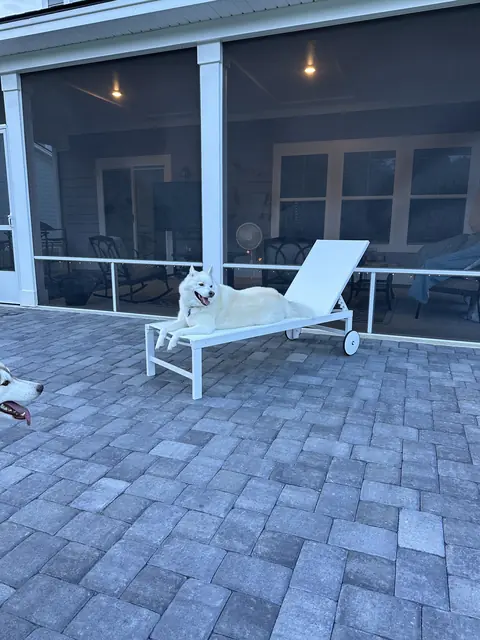
A floor squared to the house, edged so it holds, sized to the furniture.
What goes into one
- Squared to the house so the joint lines run true off the wall
- Fall set away from the building, not toward it
- Restrained border on every open edge
- Sized to the furniture, not to the leftover lawn
How the field is laid
The same units read very differently depending on the pattern. Pick one to see it drawn.
The quietest option over a large floor, and the one their gray tumbled patios are laid in. It lets the furniture and the wall be the thing you look at.
Outdoor Kitchens
The grill stops being a thing you wheel out.
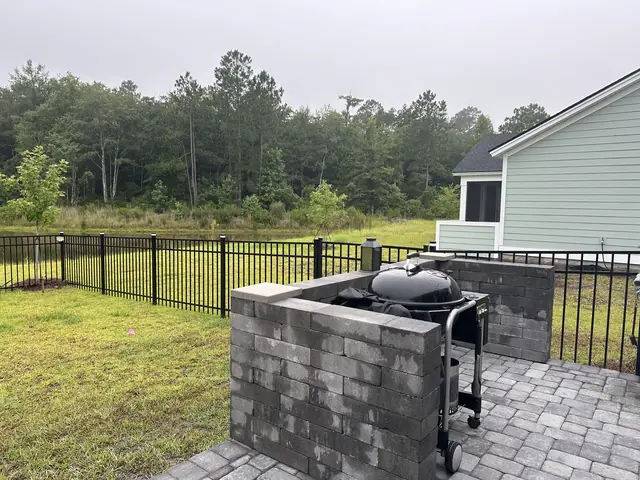
Block-built counters clad in stone, with the grill and the cooker set in.
What goes into one
- Block-built carcass on its own footing, not on the patio surface
- Cutouts sized to the actual appliances before the block goes up
- Cladding in stone, tile or the same units as the patio
- A counter surface run past the front face to throw water clear
What is going in it?
Tick what you want and the counter gets designed around it. This is the list that has to be settled before any block is laid.
Marble & Stone
The finish decides how the whole thing reads.
Large-format stone, cut to line and laid where it will be looked at closely.
Where it goes
- Front walks and entrance landings, where it is looked at closely
- Cladding and counter tops on built work
- Around a pool, where a cooler and less slippery surface earns its price
- Tight joints, cut on site rather than ordered to size
Large-format stone against concrete pavers
Both are on their list and both appear in their photographs. They are not competing for the same job.
Large-format stone
- Reads as one floor rather than a field of units
- Stays cooler underfoot in full sun
- Suits an entrance, a pool surround or a counter top
- Every cut shows, so setout has to be right first time
- Fewer joints means less tolerance for a moving base
- A damaged slab is a bigger patch than a damaged paver
Concrete pavers
- Any unit can be lifted and put back
- Interlock carries vehicle loads
- Wide choice of color, size and pattern
- Reads busier over a large open floor
- Dark units get hot in direct sun
- Joints need keeping full
Solid marks are the case for it, gray marks the cost of it. Both are real; which one wins depends on the property.
Questions
Questions people actually ask.
Paver Patios
Pavers or a poured slab?
A slab is one piece and cracks as one piece. Pavers move with the ground and any part of them can be lifted and put back. That flexibility is the whole argument, and it is why the repairs page exists.
How big should it be?
Start from what goes on it. A dining set needs room to push chairs back, a seating group needs a walking route around it, and a grill needs somewhere to stand that is not in the traffic. Those three numbers set the size.
Can a patio be added to later?
Yes, and the join is easier to hide if the second phase is planned while the first is being laid, because the units come from the same production run.
Outdoor Kitchens
Does it need water and power?
Only if you want a sink or a refrigerator. Both mean a trench and a trade, and both are much cheaper to run before the patio around the counter is laid than after.
What is the counter made of?
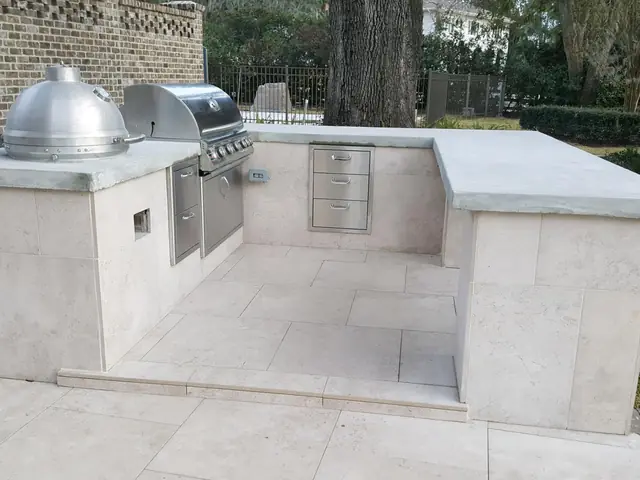
Their photographs show two answers: a poured concrete-look top, and a stone counter over stone-clad block. Which suits depends on the span and on what the cladding already is.
Can it be built onto a patio I already have?
Yes, but the counter needs its own footing rather than sitting on the paver field, so a section of the existing patio is lifted, the footing goes in, and the units go back around it.
Marble & Stone
Is it slippery when wet?
That is a question about the surface finish rather than the stone. A honed or tumbled face is a different proposition from a polished one, and around water the finish is the whole decision.
Does it stain?
Natural stone is porous and it will take a mark from oil or from iron in standing water. Sealing changes how much and how fast rather than making it immune.
Can stone and pavers be used on the same job?
Yes, and the side-yard photograph in this section is exactly that: cream stone meeting a gray paver field. The junction between the two is the detail worth getting right.
Patios & Kitchens
The floor you put the furniture on, and the counter you cook at. Send photos of the space and someone will come and look at it.